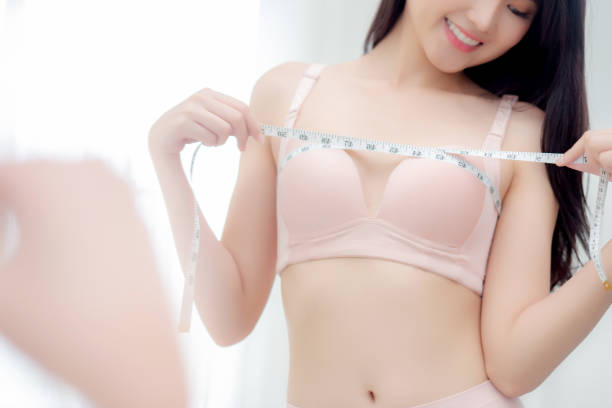
A perfect lingerie fit is not just about aesthetics; it affects posture, comfort, garment longevity, and how your clothing sits throughout the day. When lingerie fits correctly, it supports your body’s natural shape rather than compressing or shifting it. This can make everything from a work blouse to an evening dress look smoother and more intentional.
Many fit issues come from relying on outdated measurements or assuming your size stays constant. Bodies change with time, lifestyle, and even monthly cycles, which is why measuring thoughtfully and periodically is essential. With a few simple tools and the right technique, you can take accurate measurements and interpret them with confidence.
Preparing to Measure
Accurate measuring begins with the right setup. Use a soft, flexible measuring tape and a mirror if you are measuring alone. Stand naturally with relaxed shoulders and even weight distribution on both feet. Measure in a well-lit space so you can keep the tape level and read it without twisting your body.
What you wear also matters. A lightly lined bra that fits reasonably well can help you capture realistic body contours, while heavy padding can distort results. If you are measuring for bras because your current ones are uncomfortable, measure braless and then repeat with a thin, unpadded bra to compare. Many people shopping for fashionable women’s bras at Invogue appreciate having both sets of numbers, because it helps match style choices with support needs.
Taking the Underbust Measurement
The underbust measurement is the anchor for bra fit because it largely determines band size. Wrap the tape around your ribcage directly under the bust where the bra band sits. Keep it snug, level, and parallel to the floor, ensuring the tape does not ride up on your back. Exhale gently and take the reading without pulling the tape so tightly that it compresses skin.
A supportive band should feel firm but not restrictive, since most of a bra’s support comes from the band rather than the straps. If your band rides up, you may need a smaller band size; if it digs in or restricts breathing, you may need a larger one. This measurement is also useful for choosing longline bras and bralettes that rely on a stable base for comfort.
Measuring the Bust
For the bust measurement, place the tape around the fullest part of your bust, usually across the nipples, keeping the tape straight and level across your back. The tape should rest lightly against your body without flattening breast tissue. If you press too firmly, you can underestimate your bust and end up with cups that feel tight or create spillage.
To improve accuracy, check your posture in the mirror and keep your arms relaxed by your sides. If your bust is fuller or softer, leaning slightly forward can help ensure you are measuring true volume rather than how tissue settles when upright. Recording both an upright and a gently leaned measurement can be helpful when comparing cup capacities across different bra styles.
Understanding Band and Cup Logic
Once you have underbust and bust measurements, you can estimate a starting bra size by using the underbust to guide band selection and the difference between bust and underbust to guide cup size. Because sizing systems vary by brand and region, these numbers are best treated as a starting point, not a final answer. Two bras labeled the same size can fit differently due to fabric stretch, cup depth, and wire shape.
Cup size is not a fixed volume across all bands; it changes with band size, which is why “sister sizing” exists. If the band fits but the cups do not, small adjustments can often solve the problem without changing the overall support level. Approaching sizing as a relationship between ribcage and bust dimensions helps you make smarter choices when you encounter inconsistent labeling.
Common Fit Problems and What Your Measurements Are Telling You
If you experience spillage at the top or sides of the cups, the bust measurement may indicate you need more cup volume or a different cup shape. Gaping cups can happen when cups are too large, but they can also happen when the band is too big and the bra sits too low on the chest. In that situation, measuring a snugger underbust can reveal that the band should be smaller for the cups to sit correctly.

Straps that dig in often point to insufficient band support, since straps should provide stability rather than hold most of the weight. Underwire discomfort can indicate wires that are too narrow, too wide, or positioned incorrectly due to band size mismatch. Your measurements help narrow the possibilities so you can focus on the right adjustment—band, cup volume, or cup construction—rather than changing everything at once.
Measuring for Lingerie Sets, Bodysuits, and Shapewear
A “perfect fit” extends beyond bras into panties, bodysuits, and shapewear, where comfort depends on how garments interact with hips, waist, and torso length. These measurements play an important role in creating everyday wardrobe solutions for look, ensuring that each piece complements your natural shape without feeling restrictive. For bottoms, measure the natural waist and the fullest part of the hips, keeping the tape level and relaxed. Fabric stretch varies widely, so these measurements help you decide whether to prioritize a secure fit or a lighter feel.
For bodysuits and teddies, torso length becomes important because a garment can fit the bust and hips but still pull uncomfortably at the shoulders or ride up. Considering torso measurements also contributes to everyday wardrobe solutions for look, helping garments sit comfortably throughout the day. If possible, measure from the top of the shoulder down through the legs and back up to the starting point, following the path a bodysuit would take. This is especially useful for lace or structured pieces with limited stretch, ensuring a balanced and flattering fit.
Conclusion
Measuring for lingerie is a practical skill that leads to better comfort, improved support, and a more polished look in everyday clothing. When you understand underbust, bust, and key body measurements, you can interpret sizing charts more effectively and make adjustments based on real fit signals rather than guesswork.
The best results come from treating measurements as a guide and fit as the final proof. Recheck your numbers periodically, especially after weight changes, pregnancy, or shifts in training routines. With the right approach, lingerie shopping becomes less uncertain and far more rewarding, because your choices are grounded in what truly fits your body.